

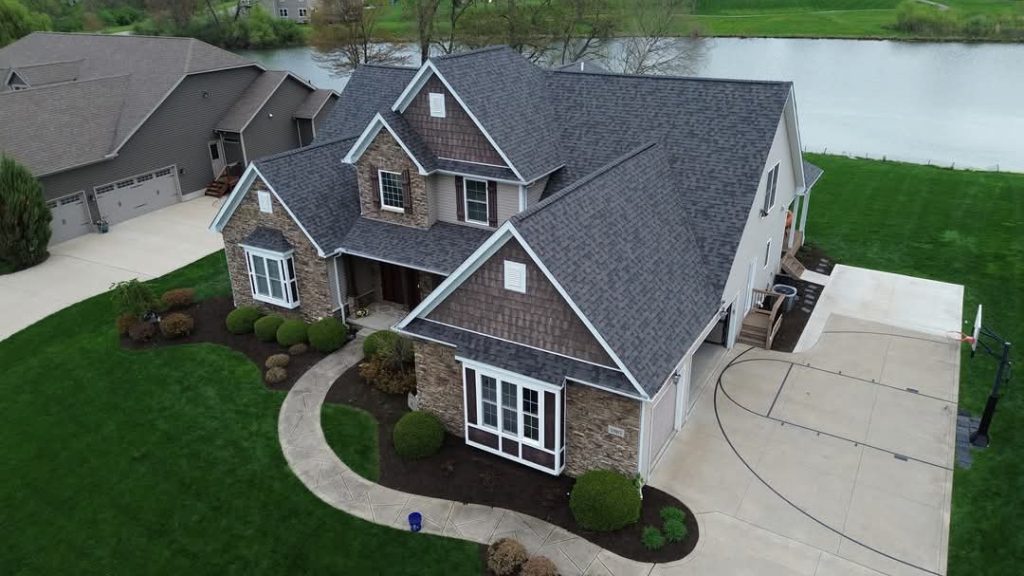
Yes. Your roofer should be on the roof with the adjuster during the inspection. A roofer meeting the insurance adjuster at your roof inspection is the single biggest thing you can do to protect your scope. The adjuster works on a tight daily schedule, and a contractor who reads the same estimating software catches damage and line items that otherwise get left off your claim. It is documentation done side by side, not a confrontation.
Why have your roofer present when the adjuster comes
- Catch missed damage. A roofer on the ladder spots hail bruising, lifted shingles, and damaged flashing the adjuster can miss in a quick pass.
- Read the same software. Your roofer reads the adjuster’s Xactimate estimate and flags dropped line items on the spot.
- Protect a fair scope. Drip edge, ice and water shield, and starter strip routinely get skipped. Your roofer raises them before the scope is final.
- Slow a rushed walk down. After a storm, adjusters carry a heavy daily load. A roofer keeps the inspection thorough instead of rushed.
That list is the short answer. Below is what actually happens at the meeting, what the adjuster looks for, and the Ohio-specific rules that change how you prepare. If a storm already hit your home, start with our storm damage roof inspection and get a roofer documenting your roof before the adjuster arrives.
What a roofer meeting the insurance adjuster at the roof inspection actually does
Most adjusters expect a contractor on site after a hail or wind event. The two walk the roof together. Your roofer documents alongside the adjuster, not against them.
On the roof, a good contractor walks the ridge, checks the field for hail hits (bruising with granule loss, soft spots where the mat is fractured), and inspects the valleys, drip edge, pipe boots, and the flashing at chimneys and skylights. Then the gutters and fascia, where hail leaves marks on the metal that help date the storm. Naming each component matters, because the adjuster’s written scope is built component by component. If a part never gets inspected, it never makes the estimate.
The adjuster’s daily reality after a storm
After a major hail event in Medina, Cuyahoga, Lorain, or Summit County, adjusters in this region often run eight to ten inspections in a single day. That math works against a thorough scope. When your roofer is on the roof asking questions and pointing at damage, the pace slows to what your claim deserves.
What does a roof insurance adjuster look for during an inspection
An adjuster checks whether your roof took functional storm damage, not just cosmetic, and how much. For hail, that means bruising and granule loss across the slopes, counted within test squares (a ten foot by ten foot section). For wind, it means creased or torn shingles, missing tabs, and lifted edges. They also check soft metals like vents, gutters, and flashing for hail dents.
Here is where Ohio homeowners get caught. Several Ohio carriers now exclude hail dents on metal components, gutters, flashing, and vents when the damage is judged cosmetic rather than functional. Knowing that before the adjuster arrives changes what you and your roofer document. If a dented vent is cracked or no longer sealing, that is functional damage, and it needs to be called out as such, not waved off as a cosmetic ding.
Can my roofer negotiate with my insurance adjuster?
Your roofer can advocate, document, and submit line items. What they cannot do, in Ohio, is take over your claim. Ohio restricts most Assignment of Benefits (AOB) arrangements, which means you stay in control of your own insurance rights. A contractor cannot legally sign your claim away from you in most cases, and that is a protection for you. If anyone pushes you to sign an AOB form right after a storm, treat it as a red flag.
What your roofer brings is fluency in the adjuster’s own pricing software. The adjuster prices your job in Xactimate, line by line. A roofer who reads Xactimate sees instantly what code is missing. The four most commonly dropped line items in Ohio hail claims are drip edge, ice and water shield, starter strip, and ridge cap.
The Ohio building code line adjusters skip
Ohio’s cold climate means code requires an ice and water barrier in valleys and at the eaves. This is not optional, and it is not an upsell. If the adjuster’s scope leaves it off, your roof cannot be rebuilt to code on what the carrier approved. A roofer at the meeting catches that gap before the estimate is locked. The same goes for ridge cap, which adjusters sometimes lump in with field shingles instead of pricing as its own line, and for ventilation components that get damaged and need replacing.
What items do insurance adjusters commonly miss on a roof inspection?
In Northeast Ohio storm claims, the dropped line items are predictable:
- Drip edge replacement at the eaves and rakes.
- Ice and water shield in the valleys and along the eaves, required by Ohio code.
- Starter strip at the eaves and rakes, often left off entirely.
- Ridge cap as a separate line, not buried inside the shingle count.
- Ventilation components, ridge vents and box vents that took hail.
None of these are exotic. They are standard parts of a code-compliant roof replacement, and they add up. Leave four of them off and a scope can come in thousands of dollars light against what the job actually costs.
ACV vs. RCV: know your coverage before the adjuster visits
Two letters decide how much money you actually get. RCV is replacement cost value, which pays what it costs to replace the roof today. ACV is actual cash value, which pays the depreciated value, your roof minus its age and wear. On a fifteen year old roof, ACV can be a fraction of the real replacement cost, and you eat the difference.
This matters right now in Ohio. Through 2025 and into 2026, multiple Ohio carriers shifted roofs over fifteen years old to ACV-only coverage at renewal, sometimes without clear notice. Homeowners do not find out until they file. Pull your policy and check the roof coverage section before you schedule the adjuster. If you are ACV, you need to know that going in, because it changes what a fair settlement looks like. Our roof insurance claims page walks through reading your policy in plain terms.
Know your wind and hail deductible too
Many Ohio policies carry a separate, percentage-based deductible for wind and hail events, not the flat dollar amount you might expect. It is often one percent of your home’s insured value. On a $250,000 home, that is $2,500 out of pocket. On a $300,000 home, one percent is $3,000. That is very different from a $1,000 flat deductible, and it changes whether filing even makes sense for minor damage. Find your wind and hail deductible before the adjuster comes so the numbers do not surprise you later.
Roof claim adjuster meeting in Ohio: what to say and what not to say
Your job at the meeting is simple. Be present, let the roofer document alongside the adjuster, and make sure nothing goes uninspected. You do not need to argue or know roofing terms.
Stick to documented facts. Give the date of the storm event and when you first noticed the damage. That is it. Do not speculate about what caused something, and do not make casual comments that sound like normal wear and tear, like “oh, that has probably been like that for years.” An offhand line like that can get damage written off as pre-existing. Let your roofer handle the technical questions. You provide the storm date, they handle the rest.
Ohio also gives you time on the front end. Homeowners generally have one to two years from the date of the storm to file a weather-related claim, depending on the policy. And under Ohio practice, a carrier cannot cancel your policy solely because you filed a single weather-related claim. Filing one legitimate hail claim does not put a target on your back.
What if the adjuster missed roof damage or the estimate is too low?
The adjuster’s first scope is not the final word. If they missed damage or the estimate comes in too low for the actual repair, you file a supplement. A supplement is additional documentation, photos, measurements, and matching Xactimate line items, submitted after the inspection to add what was left off.
This is where having a roofer at the original meeting pays off twice. They already documented the roof, so the supplement is built on photos taken the same day, not a re-creation weeks later. The one rule: file the supplement before repairs start. Once the old roof is torn off, the evidence is gone. If your adjuster’s number looks light, do not start work, call your roofer and review the scope first.
Do I need to be home when the adjuster inspects my roof?
You should be, and so should your roofer. You do not have to climb anything. Being home means you can let both of them onto the property, answer the storm-date question, and confirm the roof actually got walked. An inspection done without you and without your contractor is one you have no record of and no voice in.
Why local matters: storm chasers and the Northeast Ohio hail corridor
Northeast Ohio sits in a hail corridor. Medina, Cuyahoga, Lorain, and Summit counties take real hail and wind events, and after a big one, adjuster demand spikes and so do the door knockers. Out-of-state storm chasers flood the region after major hail, sign people up fast, and are gone before warranties matter.
A local contractor who already inspected your roof before the adjuster arrived is on record with your insurer and not going anywhere. That is your defense. 4K Roofing and Restoration is an Owens Corning Preferred contractor, which means we install to manufacturer specs, and that documentation can matter during a claim and for your warranty down the line. The business has been operating for ten years, and the owner and crew bring more than twenty-five years of combined experience on Northeast Ohio roofs. We are not leaving after the check clears.
What a roof replacement actually costs here
A typical asphalt shingle roof replacement in the Medina area runs roughly $9,000 to $30,000 depending on the size of the roof, the pitch, and the material you choose. That range is wide on purpose, because every roof is different. But knowing it helps you sanity-check an adjuster’s scope. If a full tear-off and replacement gets scoped at well under that range, something is probably missing, and that is exactly the kind of gap a roofer at the meeting catches.
Get a roofer on your roof before the adjuster does
The adjuster typically arrives one to two weeks after you file. That is your window. Schedule a free inspection with us in that same window so we document your roof before, and then beside, the adjuster. We serve 66 cities across Medina, Cuyahoga, Lorain, and Summit counties, and we know how these claims go in Northeast Ohio.
Call 4K Roofing and Restoration at 216.469.0863 for a free roof inspection before your adjuster meeting. Get the damage documented right the first time.
Frequently Asked Questions
Should my roofer be present when the insurance adjuster inspects my roof?
Yes. Having your roofer on the roof with the adjuster is routine and it helps your claim. The roofer catches hail and wind damage the adjuster may miss in a quick pass, reads the adjuster’s pricing software, and flags missing line items like drip edge, ice and water shield, and starter strip before the scope is final. It is documentation, not a confrontation.
What does a roof insurance adjuster look for during an inspection?
The adjuster checks for functional storm damage and how much of it. For hail, that is bruising and granule loss counted in test squares, plus dents on metal vents, gutters, and flashing. For wind, it is creased, torn, or missing shingles and lifted edges. In Ohio, note that some carriers exclude cosmetic-only dents on metal, so any metal damage that affects function needs to be documented as functional.
Can my roofer negotiate with my insurance adjuster?
Your roofer can advocate, document, and submit line items, but in Ohio they cannot take over your claim. Ohio restricts most Assignment of Benefits arrangements, so you stay in control of your insurance rights. A contractor cannot legally sign your claim away in most cases. If anyone asks you to sign an AOB form after a storm, treat it as a red flag.
What items do insurance adjusters commonly miss on a roof inspection?
In Northeast Ohio storm claims, the most commonly dropped items are drip edge, ice and water shield in valleys and eaves (required by Ohio building code), starter strip at eaves and rakes, ridge cap priced as its own line, and damaged ventilation components. Leaving several of these off can make a scope come in thousands of dollars short of the real job cost.
What should I say and not say to a roof insurance adjuster?
Stick to documented facts: the date of the storm and when you first noticed damage. Let your roofer handle the technical questions. Do not speculate about what caused the damage and avoid casual comments that sound like normal wear, such as saying something has probably been that way for years. Offhand remarks like that can get legitimate storm damage written off as pre-existing.
How do I get a supplement added to my roof insurance claim after the inspection?
If the adjuster missed damage or the estimate came in too low, your roofer files a supplement: additional photos, measurements, and matching line items submitted after the inspection to add what was left off. The adjuster’s first scope is not the final word. File the supplement before any repairs start, because once the old roof is torn off the evidence is gone.