

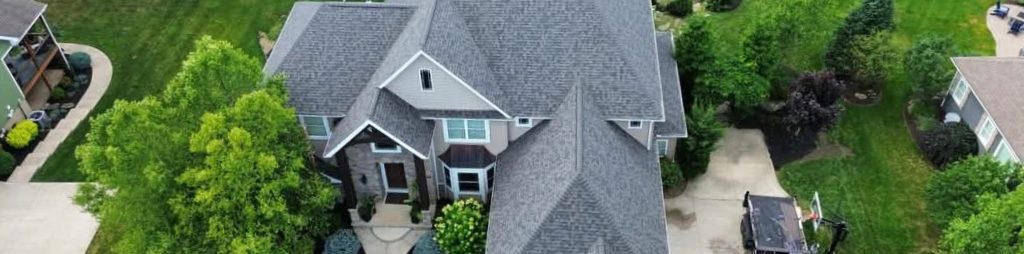
How long does a roof last in Northeast Ohio? A roof in Northeast Ohio lasts about 15 to 30 years. Architectural asphalt shingles run 20 to 30 years, and older 3-tab shingles run 15 to 20 years. Our freeze-thaw winters, lake-effect snow, and ice dams pull most roofs toward the lower end of those ranges. If your roof is past 20 years, have it inspected before it starts leaking.
I have walked a lot of roofs across Medina County and the surrounding area, and the question I hear most is some version of “how much longer do I have?” The honest answer is that the number printed on the shingle wrapper is a national rating made in a lab. It is not what happens in Brunswick or Wadsworth after fifteen winters. Northeast Ohio is harder on a roof than most of the country, and the lifespan you actually get depends on the shingle type, your attic ventilation, and how many storms have rolled through. Here is what to realistically expect and how to read the signs that your roof is at the end of the line.
Roof Lifespan by Type in Northeast Ohio
Here is what these materials actually deliver in our climate, not the glossy brochure number. These ranges already account for the freeze-thaw beating our roofs take.
| Roof Type | Expected Lifespan in NE Ohio |
|---|---|
| 3-tab asphalt shingle | 15 to 20 years |
| Architectural / dimensional asphalt shingle | 20 to 30 years |
| Wood shake | 20 to 30 years |
| Metal (standing seam or panel) | 40 to 70 years |
| Slate | 75 to 100+ years |
The vast majority of homes around here run asphalt shingles, so most of this guide focuses on them. Architectural shingles, the thicker dimensional kind, have largely replaced flat 3-tab on newer roofs because they hold up better to wind and shed water more reliably. If your roof was installed in the last fifteen years or so, it is probably architectural. If it is a flat, uniform pattern and the house has not been re-roofed in a couple of decades, you likely have 3-tab nearing the end.
Asphalt shingle lifespan in Ohio: why ours run shorter
A 25-year architectural shingle in Arizona behaves very differently than the same shingle in Hinckley. Heat, UV, and especially our freeze-thaw swings break down the asphalt and loosen the protective granules over time. The shingle rating assumes good ventilation, proper installation, and an average climate. We do not have an average climate. Plan on the realistic asphalt shingle lifespan in Ohio landing at the lower edge of the rated range unless the roof was installed and ventilated correctly.
What Shortens a Roof’s Lifespan in Northeast Ohio’s Climate
The biggest factor in how long a roof lasts in Northeast Ohio is not the shingle brand. It is what our weather does to it year after year. Four things do the most damage.
Freeze-thaw cycle roof damage
Cleveland and the surrounding counties see dozens of freeze-thaw cycles each winter, where the temperature crosses the freezing mark back and forth. Each cycle lets water work into tiny cracks in the shingle, expand as it freezes, and pry things apart a little more. Repeat that through twenty winters and you understand why our roofs age faster than the wrapper promises. Medina County sits a little inland from Lake Erie, so we get slightly more moderate temperature swings than lakefront Cuyahoga communities like Parma or the inner-ring suburbs, but we are still squarely in the same damage band.
Lake-effect snow and ice dams
Lake-effect snow is the other half of the problem. Heavy, wet snow sits on the roof for weeks. Here is the part most homeowners do not see: if your attic is not ventilated and insulated well, heat escaping from the house warms the underside of the roof deck. That melts the snow near the ridge. The water runs down toward the eave, which stays cold because it overhangs the heated part of the house, and there it refreezes. That ridge of ice is an ice dam, and it backs up melting water under your shingles. Ice dams are a leading cause of interior water damage in Northeast Ohio winters, and they show up as stained ceilings in February, long after the roof itself wore down.
Hail and wind, including the damage you cannot see
We get our share of hail and high-wind storms. Obvious damage is easy: missing shingles, dented gutters, cracked siding. The sneaky part is the damage you cannot see from the ground. Hail that does not puncture a shingle can still knock the granules loose. Those granules are the UV shield. Once they are gone, the asphalt underneath bakes in the sun and ages fast. A hailstorm can quietly cut years off a roof’s remaining life without leaving a single visible hole. That is why I tell people to get a post-storm roof inspection even when the roof looks fine from the driveway.
Attic ventilation, the factor you actually control
Ventilation is the single biggest controllable variable in whether your roof reaches its rated lifespan. In summer, a poorly ventilated attic traps heat and bakes the shingles from below, which is real enough that it can void the manufacturer’s warranty. In winter, that same trapped heat drives the ice dam cycle described above. A properly ventilated roof has balanced airflow: intake at the soffits along the eaves, exhaust at the ridge. Air moves up and out, the deck stays closer to outdoor temperature, and the shingles get their full life. If you are replacing a roof, fixing the ventilation at the same time is one of the smartest dollars you can spend.
Signs You Need a New Roof: The End-of-Life Checklist
You do not need to climb up there to spot most of these. Here are the signs you need a new roof in Northeast Ohio. If you are checking several of these boxes, your roof is at or near end of life.
- Curling or cupping shingles. Edges lifting or the center dishing out means the shingle has lost its flexibility and is pulling away from the deck.
- Granules in the gutters. After a rain, look for what resembles coarse black sand collecting in the gutters. That is your UV shield washing off.
- Daylight through the attic boards. Go up on a sunny day. If you see light coming through the roof deck, water is getting through too.
- Water stains on ceilings or walls. Brown rings or streaks, especially near exterior walls, often trace back to ice dams or failed flashing.
- A sagging roof deck. Any dip or wave in the roofline is a structural red flag. Call someone before the next snow load.
- Moss or algae lifting shingles. Growth holds moisture against the roof and works under the shingles, accelerating rot.
- Roof age past 20 years. If you have asphalt shingles and you cannot remember the last replacement, age alone is a strong signal.
- Neighbors replacing their roofs. Homes in the same subdivision were usually built and roofed within a few years of each other. If the houses around you are getting new roofs, yours is on the same clock.
That last one is a genuinely useful local cue. When I am in a neighborhood in Strongsville or Seville and I see two or three new roofs on a street, I know the rest are not far behind. Builders roof a whole development in a tight window, and those roofs all age together.
When to Replace a Roof in Medina: Repair or Replace?
Not every aging roof needs to come off tomorrow. The question is whether a repair buys you real time or just delays the inevitable. Here is the rule of thumb I use, and it is the same math I would run on my own house.
If the roof is within about five years of its expected end of life, and the repair cost would run more than roughly 25 percent of what a full replacement costs, replacement is almost always the better financial move. Patching a tired roof rarely stops the next failure. You fix one leak and another opens up two valleys over, because the whole field of shingles is at the same age and the same state of wear. At that point you are throwing money at a roof that is going to need replacing soon anyway.
If the roof is in the middle of its life and the damage is isolated, say a section that took a tree limb or a run of flashing that failed, a quality roof repair makes sense and can give you many more good years. The deciding factors are age, how widespread the wear is, and the cost ratio. A good contractor will tell you honestly which side of that line you are on instead of selling you a roof you do not need yet.
How much does a roof replacement cost in Medina, Ohio?
Most roof replacements in Medina County and the surrounding Northeast Ohio area run roughly $9,000 to $30,000 for a standard residential home with architectural shingles. That is a real-world range, not a quote. What pushes a project higher: larger square footage, steeper pitches that need extra safety setup, multiple old layers that have to be torn off, and premium materials. Steeper and bigger means more labor and more material. The only way to get a real number for your house is a measured estimate, which is why we do those for free. You can read more about what goes into a full roof replacement and what the process looks like.
Does My Roof Age Affect My Homeowners Insurance in Ohio?
This is the part almost nobody explains until it is too late, so pay attention to this section. Roof age does affect your coverage in Ohio, and the difference can be thousands of dollars at claim time.
Most Ohio insurers cover roofs at Replacement Cost Value, or RCV, while the roof is relatively young. RCV means if a covered storm wrecks the roof, they pay what it costs to replace it today, minus your deductible. The catch: once a roof passes a certain age, commonly somewhere in the 15 to 20 year range, many carriers shift that coverage to Actual Cash Value, or ACV. ACV pays the depreciated value of the old roof, not the cost to put on a new one.
Here is what that looks like in practice. Say you have a 20-year-old roof built from 25-year shingles, and a hailstorm totals it. Under ACV, the insurer figures the roof had used up most of its life, so after depreciation and your deductible, you might receive only a small fraction of what a new roof actually costs. You are left covering the rest out of pocket. Some carriers go further and either raise premiums or decline to renew a policy once the roof crosses that age threshold.
The takeaway: find out how your policy treats your roof before a storm hits, not after. If your roof is creeping toward that 15 to 20 year window, a documented inspection now can help you decide whether to replace it on your terms rather than scrambling after a denial. If you do have storm damage, we can walk you through the insurance claim process and meet your adjuster on the roof.
Can I file a hail damage claim on an older roof in Ohio?
You can file, but the age of the roof shapes what you get back. If your policy has already shifted to ACV, the payout on an older roof reflects depreciation, as described above. That is exactly why a post-storm inspection matters even when the roof looks intact. Documenting fresh hail damage promptly, while it is clearly storm-related and recent, gives you the strongest position with your carrier. Wait too long and the insurer may attribute the wear to age rather than the storm.
The Owens Corning Warranty Angle
4K Roofing is an Owens Corning Preferred contractor, and that status has a practical effect on how long your new roof lasts and what happens if something goes wrong. Owens Corning Duration shingles carry a limited lifetime material warranty against manufacturing defects. That covers the shingle itself.
The piece most homeowners miss is workmanship. A material warranty does you no good if the roof leaks because it was installed wrong, and installation error is a common cause of premature roof failure. Preferred contractor status lets us register enhanced warranty coverage that includes workmanship, so the labor is backed too, not just the product. These warranties are generally transferable to a future buyer, which helps at resale. What voids them is the predictable stuff: poor ventilation, layering a new roof over an old one to save money, and unqualified installation. We do it by the book specifically so the warranty holds up.
When to Schedule a Roof Inspection in Northeast Ohio
Timing matters here, and it ties directly to our climate. Two windows are worth putting on the calendar.
Spring, roughly March through April. This is right after the freeze-thaw and ice dam season ends. Spring is when you catch the damage winter just did, before summer growth and algae hide it and before you forget about that February ceiling stain. Anything that loosened or lifted over the winter is visible now.
Fall, roughly September through October. This is your pre-winter checkup, before the first hard frost. The goal is to find and fix any weakness, loose flashing, a worn valley, a gap at the chimney, before snow loads and ice start stressing the structure. Going into winter with a sound roof is how you avoid the emergency call in January.
If a big hail or wind storm rolls through outside those windows, do not wait for the calendar. Get it looked at while the damage is fresh and clearly tied to the storm.
Serving Medina and Northeast Ohio
4K Roofing & Restoration is based in Medina and we work across Medina, Cuyahoga, Lorain, and Summit Counties, 66 communities in all. That includes Brunswick, Wadsworth, Strongsville, Hinckley, Sharon Center, Seville, and plenty of towns in between. We know these neighborhoods and we know how the lake-effect belt and the freeze-thaw cycle treat the roofs out here, because we are on them year-round. The business has been doing this for 10 years, and the owner and crew bring 25-plus years of roofing experience to every job.
Not sure how much life your roof has left? We will tell you straight. Our free inspection includes a real look at your shingles, attic ventilation, flashing, and any storm damage, plus an honest read on whether you should repair, replace, or just keep an eye on it. No pressure and no scare tactics. Call 4K Roofing & Restoration at 216.469.0863 to schedule your free roof inspection.
Frequently Asked Questions
How long does an asphalt shingle roof last in Northeast Ohio?
In Northeast Ohio, architectural (dimensional) asphalt shingles typically last about 20 to 30 years, while older 3-tab shingles last closer to 15 to 20 years. Our freeze-thaw cycles, lake-effect snow, and ice dams tend to push roofs toward the lower end of those ranges, especially if attic ventilation is poor.
What shortens a roof’s lifespan in Ohio’s climate?
The main culprits are freeze-thaw cycles that crack and pry shingles apart, plus lake-effect snow and ice dams that force water under the shingles. Hail can knock granules loose and accelerate UV breakdown, and poor attic ventilation bakes shingles from below. Together these pull most roofs toward the short end of their rated life.
How do I know when it’s time to replace my roof?
Watch for curling or cupping shingles, granules collecting in the gutters, daylight through the attic boards, water stains on ceilings, a sagging deck, and moss or algae lifting shingles. Roof age past 20 years and neighbors in your subdivision replacing their roofs are also strong signals. If you are checking several of these boxes, schedule an inspection.
Does the age of my roof affect my homeowners insurance in Ohio?
Yes. Many Ohio insurers cover roofs at Replacement Cost Value while they are newer, then shift to Actual Cash Value once the roof passes roughly 15 to 20 years. ACV pays the depreciated value, so an older roof may receive only a fraction of replacement cost after the deductible. Some carriers also raise premiums or decline to renew once a roof crosses that age.
How much does a roof replacement cost in Medina, Ohio?
Most roof replacements in Medina County and surrounding Northeast Ohio run roughly $9,000 to $30,000 for a standard home with architectural shingles. Larger homes, steeper pitches, multiple layers to tear off, and premium materials push the cost higher. The only way to get an accurate number is a measured estimate, which 4K Roofing provides free. Call 216.469.0863.
Can I file an insurance claim for hail damage on an older roof in Ohio?
You can file, but the roof’s age affects the payout. If your policy has shifted to Actual Cash Value, the claim reflects depreciation. That is why a prompt post-storm inspection matters even if the roof looks fine: documenting fresh, clearly storm-related hail damage quickly gives you the strongest position with your carrier before the wear gets attributed to age.