

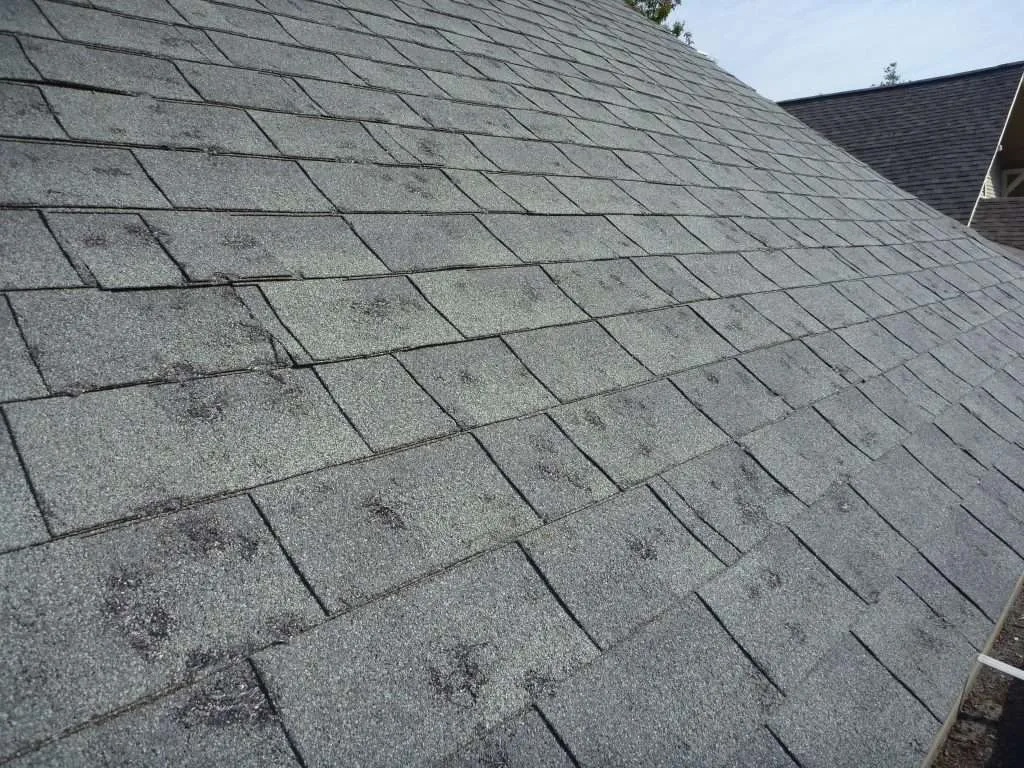
If the April 15 hail storm hit your home and you have possible Medina Ohio roof damage, do these five things in order: 1) take timestamped photos of your gutters, downspouts, and any dented metal, 2) check the gutters from the ground for piles of washed-off shingle granules, 3) look in the attic with a flashlight for fresh water stains, 4) get a free roof inspection from a local contractor before you call your insurer, and 5) file your claim promptly so you stay ahead of Ohio policy deadlines. Done in that order, those steps protect both your house and your claim.
The April 15 hail storm moved across Medina County and much of Northeast Ohio with dime to quarter-size hail, and some reports near Medina pushed close to an inch. That size does not always punch a hole you can spot from the driveway, but it bruises asphalt shingles, knocks loose the protective granules, and cracks tabs. That is the kind of April 15 hail storm Medina Ohio roof damage that does not leak today and then opens up during the first heavy rain in July. So even if your roof looks fine from the ground, this storm is worth taking seriously.
We are 4K Roofing & Restoration, based in Medina. We have been in business 10 years, and the owner and crew bring more than 25 years of combined roofing experience to every inspection. We work hail claims across Medina, Cuyahoga, Lorain, and Summit Counties year-round. Below is the same advice we give neighbors who call us after a storm like this one.
What April 15 hail storm Medina Ohio roof damage actually looks like
Hail damage on asphalt shingles is not subtle once you know what to look for. The catch is that most of it lives on the roof, not at eye level. Up close, here is what shows:
- Circular dark spots. Hail knocks granules off in a roughly round pattern, exposing the black asphalt mat. Fresh hits look darker than the shingle around them.
- Missing granules. Granules are the shingle’s sunscreen. Once they are gone, the asphalt bakes and the shingle fails years early.
- Cracked or split tabs. Dime to quarter-size hail can crack a tab outright, especially on older or brittle roofs.
- Bruising. This is the sneaky one. A bruise is a soft spot where the hail fractured the mat without breaking the surface. You cannot see it from the ground and most homeowners cannot feel it. A roofer presses on it and feels the give. Bruising is what adjusters miss most often, which is exactly why you want a roofer on the roof.
Safe ways to check for hail damage without climbing up
You do not need to get on the roof, and you should not. Two checks are safe from the ground and tell you a lot.
Check your gutters and downspouts. When hail strips granules off the shingles, they wash into the gutters and pile up at the base of the downspouts. A sandy, sediment-like buildup that was not there before April 15 means your roof took a beating. This is one of the most reliable post-storm signs a homeowner can spot without a ladder.
Check the attic. Grab a flashlight and look at the underside of the roof deck. Fresh water staining, damp or matted insulation, or daylight at the ridge vent all signal that the storm opened the roof up. Interior evidence like this is some of the strongest proof you can hand an adjuster, and almost nobody thinks to look.
Your post-storm roof checklist for April 15
This is the part that matters most for protecting your claim. Work it in order.
- Document the damage with timestamped photos. Shoot the gutters, the granule buildup, any attic staining, dented gutters or downspouts, dings on the AC condenser fins, and dents in any soft metal around the house. Your phone stamps the date automatically. This builds your file.
- Do the ground-level checks above. Gutters and attic, no ladder.
- Call a local roofer before you call your insurer. A reputable local contractor inspects for free and tells you whether you actually have a claim worth filing. A claim that gets denied can still count against you, so it pays to know what you have first.
- Handle temporary protection if anything is leaking. Active leak? Get it tarped. More on that below.
- File the claim promptly. Do not sit on it. Ohio policy deadlines are tighter than people expect.
If you want a roofer to walk the roof and tell you straight whether you have damage, that is what our storm damage inspections are for. No charge to look.
How do I protect my roof from leaking right now?
If water is getting in, a tarp buys you time. A properly installed tarp covers the exposed area, runs up over the ridge, and gets secured so wind does not peel it off in the next storm. It is not a repair. It is a stopgap to keep water out of your house until the roof is fixed.
Here is the part most homeowners do not know: your policy requires you to take reasonable steps to mitigate further damage. If your roof is leaking and you do nothing, the insurer can deny the part of the claim tied to the new water damage you let happen. Tarping is not just smart, it is part of your duty as a policyholder. A reputable local contractor can handle emergency tarping fast, and the cost is typically folded into your claim.
How long do I have to file a roof insurance claim in Ohio after hail?
Sooner is always better, and Ohio policies have more than one clock running. A few things to know:
- Notice deadline. Many Ohio homeowner policies require you to report the loss within a set window, and some specify notice within months of the event. Read your policy, or have us help you read it. Missing this window can sink an otherwise valid claim.
- Contractual lawsuit window. A lot of policies cap how long you have to sue the insurer over a dispute, often around a year from the loss, which is shorter than people expect.
- Statute of limitations. Ohio’s general statute of limitations runs longer than that, but you cannot count on it when your policy contains a shorter contractual limit.
The takeaway: file promptly after the April 15 storm and you keep every right open. Wait, and you start losing options. Our team helps homeowners with the paperwork side through our insurance claims support.
Should I call my insurance company or a roofer first?
Call the roofer first. A free roofer inspection tells you whether the damage is real and claim-worthy before you ever open a claim. Adjusters are skilled, but they handle every kind of property loss and many of them are not roofers. A roofer who works hail damage every week will spot bruising, flag soft-metal damage, and catch the items that get missed.
Even more important: have your contractor present during the adjuster’s inspection, not just before it. When the roofer is on the roof with the adjuster, they can point out the bruised shingles and granule loss in real time. That single step is often the difference between a full roof approval and a partial repair that leaves you with a patchwork roof and a future leak.
Does Ohio homeowners insurance cover hail damage roof replacement?
Most standard Ohio homeowners policies cover hail damage, but two policy details decide how much money actually reaches you.
RCV vs. ACV: the difference that costs you thousands
RCV (Replacement Cost Value) pays what it costs to replace the roof today. ACV (Actual Cash Value) pays the depreciated value, meaning the insurer subtracts for the age and wear of your old roof. On an older roof under an ACV policy, that payout gap can run into thousands of dollars out of your pocket.
Here is something many local competitors will not mention: under a Fannie Mae requirement that took effect in 2024, most homes carrying a Fannie Mae backed mortgage are expected to insure the dwelling at replacement cost. If you have a mortgage on your Medina County home, there is a good chance you are entitled to RCV even if you assumed otherwise. Check your declarations page, and ask us if you are not sure what you are reading.
The wind/hail deductible clause most people miss
A lot of Ohio policies do not use a flat dollar deductible for wind and hail. They use a percentage of your insured value. For example, a 2 percent wind/hail deductible on a home insured for 350,000 dollars is 7,000 dollars out of pocket before coverage even activates, not the flat 1,000 dollars you might be picturing. Pull your declarations page and find your wind/hail deductible before you assume the claim is worth filing. This one line item changes the math for a lot of homeowners.
How much does a roof replacement cost in Northeast Ohio after hail?
For a typical home in the Medina and greater Northeast Ohio area, a full roof replacement generally runs roughly 8,000 to 18,000 dollars, depending on the size of the roof, the pitch, the number of layers to tear off, and the materials you choose. A simple ranch with a low slope sits at the lower end. A larger two-story with a steep, cut-up roofline sits higher.
The good news on a covered hail claim: under an RCV policy, your insurance check should cover most or all of the replacement, minus your deductible. That is the whole point of carrying the coverage. We handle the estimate, the documentation, and the work itself, which you can read about on our roof replacement page.
How do I spot a storm chaser roofing scam after April 15?
After any big Northeast Ohio hail storm, out-of-town crews flood the area. Some are fine. Many are not, and they vanish the moment your check clears. Watch for these red flags:
- Out-of-state license plates and no local office address you can drive to.
- Pressure to sign the same day, especially a contingency agreement handed to you on the doorstep.
- A large upfront deposit demand before any work begins.
- No verifiable local track record. Real local contractors have local reviews, a local BBB presence, and a valid Ohio contractor registration you can look up.
Before you hire anyone, verify the Ohio registration, search for reviews tied to a real Medina-area address, and ask how long the crew has actually worked Northeast Ohio. A company rooted here has to live with its reputation. A storm chaser does not.
What Owens Corning Preferred status means for your roof
4K Roofing is an Owens Corning Preferred Contractor. Here is why that matters to you and not just to us. The full Owens Corning manufacturer warranty is only available through a Preferred Contractor. If a storm chaser installs your roof, you do not get that warranty coverage, no matter what shingles they nail down. When your current roof is already a decade old and you are replacing it after this storm, the new one needs to outlast the next ten years of Ohio weather. The manufacturer warranty backing that roof is worth choosing the right installer for.
Free inspection across four counties
4K Roofing & Restoration serves Medina, Cuyahoga, Lorain, and Summit Counties, covering 66 cities across Northeast Ohio. If the April 15 hail storm hit your home, do not wait for the next rain to find out whether your roof took damage. We will come out, walk the roof, check for the bruising and granule loss most people miss, and tell you straight whether you have a claim worth filing. No charge, no pressure, no doorstep contract. You can read more about our work on the Medina roofing page.
Call 4K Roofing & Restoration at 216.469.0863 to schedule your free post-storm roof inspection. The sooner we look, the more of your claim window stays open.
Frequently Asked Questions
What does hail damage look like on a roof after the April 15 storm?
On asphalt shingles, hail damage shows up as circular dark spots where granules were knocked off, patches of missing granules that expose the black asphalt underneath, and cracked or split tabs. The dime to quarter-size hail from the April 15 storm also causes bruising, soft spots where the shingle mat fractured without breaking the surface. Bruising is not visible from the ground and takes a roofer’s hands-on inspection to find, which is why a free professional inspection matters even when the roof looks fine from the driveway.
How long do I have to file a roof insurance claim in Ohio after hail damage?
File as soon as possible. Many Ohio homeowner policies require you to report the loss within a set notice window, sometimes within months of the event. Separately, a lot of policies set a contractual limit, often around a year, on how long you have to sue the insurer over a dispute, which is shorter than Ohio’s general statute of limitations. Filing promptly after the April 15 storm protects every one of these rights. Read your policy or ask a local contractor to help you find the deadlines.
Should I call my insurance company or a roofer first after hail damage?
Call a local roofer first. A free roofer inspection tells you whether the damage is real and claim-worthy before you open a claim, since a claim that gets denied can still count against you. Just as important, have your contractor present during the adjuster’s inspection, not only before it. A roofer on the roof with the adjuster can point out bruising and granule loss in real time, which is often the difference between a full roof approval and a partial repair.
What is the difference between RCV and ACV coverage for a hail-damaged roof in Ohio?
RCV, or Replacement Cost Value, pays what it costs to replace the roof today. ACV, or Actual Cash Value, pays the depreciated value after subtracting for the age and wear of your old roof, which can leave a gap of thousands of dollars on an older roof. Under a Fannie Mae requirement that took effect in 2024, most homes with a Fannie Mae backed mortgage are expected to carry replacement cost coverage on the dwelling, so many Medina County homeowners with a mortgage are entitled to RCV. Check your declarations page to confirm.
How much does a roof replacement cost in Northeast Ohio after hail damage?
For a typical home in the Medina and greater Northeast Ohio area, a full roof replacement generally runs roughly 8,000 to 18,000 dollars, depending on roof size, pitch, the number of layers to tear off, and the materials chosen. On a covered hail claim under an RCV policy, your insurance payout should cover most or all of the replacement, minus your deductible. Watch your wind/hail deductible, since many Ohio policies use a percentage of insured value rather than a flat amount.
How do I spot a storm chaser roofing scam after a hail storm?
Watch for out-of-state license plates, no local office address you can visit, pressure to sign a contract the same day, and demands for a large upfront deposit before any work begins. Legitimate Northeast Ohio contractors have a verifiable Ohio contractor registration, local reviews tied to a real local address, and a local BBB presence. Before hiring anyone after the April 15 storm, look up the Ohio registration, confirm a local track record, and avoid any crew that vanishes the moment your check clears.