

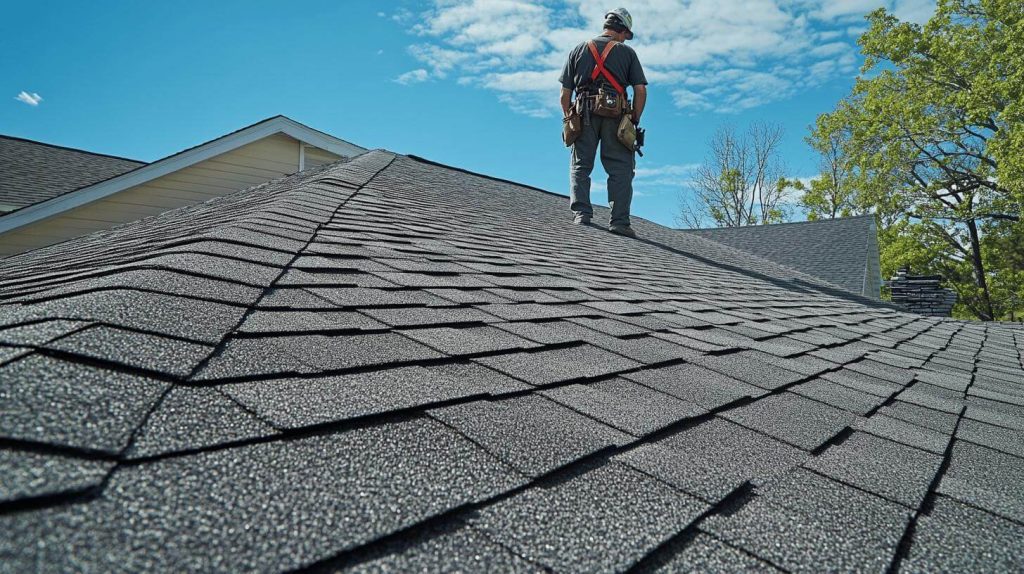
Yes. Homeowners insurance does cover roof damage in Ohio when the damage comes from a sudden, covered event like hail, wind, ice, a falling tree, or fire. It does not cover roof damage caused by age, wear and tear, or neglected maintenance. The first thing an Ohio adjuster decides is what caused the damage and whether it happened suddenly or gradually. That single answer usually settles whether your claim is paid.
That is the short version. The longer version matters here in Northeast Ohio, because how much you actually collect depends on your roof’s age, your deductible, and whether your policy pays on an actual cash value or replacement cost basis. I have walked a lot of Medina, Lorain, Cuyahoga, and Summit County roofs alongside adjusters, and the homeowners who do best are the ones who understand these rules before the storm hits. Let me walk you through it the way I would standing in your driveway.
What roof damage is covered by homeowners insurance in Ohio
A standard Ohio homeowners policy is an open-peril or named-peril contract that pays when a covered peril causes sudden damage. For roofs, the covered causes you will see most often around here are:
- Hail. The big one in our area. Hail bruises and fractures shingles, knocks granules loose, and dents soft metals.
- Wind. Straight-line winds and gusts that lift, crease, or tear off shingles. Missing shingles after a spring storm are usually covered.
- Ice dams and the weight of ice or snow. Common in our lake-effect winters when snow melts, refreezes at the eave, and forces water under the shingles.
- Falling trees and limbs. A tree coming down on your roof in a windstorm is a covered loss.
- Fire and lightning. Less frequent, but clearly covered.
The common thread is that the damage happened suddenly and from an outside force. That is the test. If a March hailstorm cracks your shingles, that is a storm damage claim your carrier should pay, subject to your deductible and the terms below.
What roof damage is NOT covered by homeowners insurance in Ohio
This is where a lot of claims die, so read it twice. Insurance covers sudden damage, not slow decline. The exclusions that come up most often:
- Wear and tear. A roof that is simply worn out from age and sun is not a covered loss. Wear and tear is not covered roof damage on any standard policy, full stop.
- Lack of maintenance. Rot from a clogged gutter or a leak you ignored for two years gets denied.
- Pre-existing damage. Damage that was there before the storm you are claiming. Adjusters look hard for this.
- Flood. Rising water is never covered by a homeowners policy. That is a separate flood policy.
- Cosmetic damage, if you have the endorsement. More on this one below, because it is a trap.
An adjuster who decides your roof failed from age rather than from a specific storm can deny the whole claim. That is exactly why documentation and timing matter so much, and why I tell people to get a roofer up there before they ever pick up the phone with the carrier.
ACV vs RCV roof insurance: the part that decides your check
Two roofs hit by the same storm can produce wildly different payouts because of how the policy values the loss. Understanding ACV vs RCV roof insurance is the single most useful thing on this page.
Replacement Cost Value (RCV)
RCV pays what it actually costs to replace your roof today, with no deduction for age, minus your deductible. This is the good kind of policy.
Actual Cash Value (ACV)
ACV pays the depreciated value: replacement cost minus the wear your roof has already used up, minus your deductible. The older the roof, the more depreciation comes off, and the smaller your check.
A real Northeast Ohio example
Say you have a 14-year-old roof. Replacement cost is 14,000 dollars. The carrier depreciates it 5,000 dollars for age. Your deductible is 1,000 dollars.
- On an ACV policy you collect about 8,000 dollars (14,000 minus 5,000 depreciation minus 1,000 deductible). That 8,000 is all you get, and you cover the rest of the new roof yourself.
- On an RCV policy you still get the 8,000 ACV check first. Then, after the work is done and you submit the final invoice, the carrier releases the 5,000 depreciation holdback. Your out-of-pocket ends up being just the 1,000 dollar deductible.
That second payment is the part homeowners miss. Which brings us to the next point.
The two-payment RCV structure: do not leave money on the table
On an RCV claim you are paid in two checks, not one. Check one is the ACV amount, sent shortly after the claim is approved. The difference between ACV and full replacement cost is called recoverable depreciation, and the carrier holds it back until the roof is finished. To collect check two you submit your contractor’s final invoice and proof the work is complete.
I have seen people cash the first check, do a cheap partial fix or nothing at all, and never claim the holdback. On the example above that is 5,000 dollars walking away. If you have an RCV policy, finish the job through a licensed contractor and submit the paperwork. We handle that documentation for our customers on every insurance claim we work.
How does roof age affect my insurance payout in Ohio?
Roof age coverage in Ohio is not one universal rule, but carriers follow patterns. As a rough guide:
- Under 10 to 15 years: usually full replacement cost coverage.
- Over 15 to 20 years: many carriers switch the roof to ACV only, or limit coverage. Your payout shrinks even though your premium did not.
- Over 20 years: some carriers exclude the roof from coverage entirely or decline to renew the policy until the roof is replaced.
Can your insurance company deny your roof claim because the roof is old? They cannot deny a legitimate storm claim purely on age if a covered peril caused the damage. What they can do is value an older roof on an ACV basis, which lowers the check, or non-renew you at the next cycle. Age affects how much you collect more than whether you collect at all. Pull your declarations page and look for any roof age or roof surfacing settlement endorsement so you know which basis you are on before a storm, not after.
Your wind and hail deductible may be bigger than you think
Your roof insurance deductible in Ohio is not always the flat number you remember. Many carriers now write a separate wind and hail percentage deductible, and it applies to most roof claims here because wind and hail cause most of our roof losses.
A percentage deductible is calculated on your home’s insured value, not the claim amount. Here is the math on a 300,000 dollar home with a 2 percent wind and hail deductible:
2 percent of 300,000 dollars equals 6,000 dollars out of pocket before insurance pays a dime.
Now stack that on the ACV example from earlier. If your 14-year-old roof is on ACV and you also carry a 6,000 dollar percentage deductible, a moderate hail claim might barely clear your deductible, or not clear it at all. That combination, an aging roof on ACV plus a percentage deductible, is the quiet reason a lot of Medina-area claims come back smaller than the homeowner expected. Check your declarations page for the words “windstorm or hail deductible” and confirm the percentage.
The Ohio roof matching law most homeowners never hear about
This one is worth real money and almost nobody knows it exists. Ohio Administrative Code 3901-1-54 requires insurers to restore your property to a “reasonably comparable” appearance after a covered loss. In plain English: if hail damages part of your roof and the original shingle color is discontinued, the carrier cannot make you live with a mismatched patch of close-but-not-matching shingles.
If a matching shingle is no longer manufactured, the matching rule can entitle you to a full slope, or in some cases a full roof, rather than a partial roof repair, so the result looks uniform. On a 12-year-old roof where the original product line has been retired, that distinction can turn a 2,000 dollar patch into a full roof replacement. We raise this with the adjuster on the spot when the damaged shingle is no longer available. Bring it up. Most homeowners do not know to.
Watch for the cosmetic damage exclusion at renewal
Here is a renewal-time trap. Some Ohio carriers quietly add a cosmetic damage exclusion endorsement when your policy renews. It lets them deny hail dents that they classify as cosmetic only, things like dents on metal gutters, vents, downspouts, and trim, on the theory that the dent does not affect function.
The problem is that hail hard enough to dent your gutters often bruised your shingles too, and a cosmetic exclusion can be used to chip away at the whole claim. When your renewal documents arrive, read the endorsement list. If you see a cosmetic damage or hail cosmetic exclusion, you may want to ask your agent to remove it, especially living in a hail corridor like ours.
Storm damage roof claim in Ohio: timing and the filing deadline
How long do you have to file a roof insurance claim in Ohio? Under most Ohio policies you have a one-year window from the date of the storm to file. But that window is set by your contract, and some carriers write shorter deadlines into the policy language. Do not assume you have a full year. Check the declarations page and the conditions section, and when in doubt, file sooner.
Timing matters more here than in southern Ohio for a simple reason: our weather hits in waves. By the time you notice a leak in July, the spring hailstorm that caused it may be months back, and proving which storm did the damage gets harder with every week. Date your photos. Keep the local storm reports.
Why Medina, Cuyahoga, Lorain, and Summit Counties see more roof claims
Northeast Ohio sits in a high-frequency hail corridor, and our roofs take a specific beating that drives most claims:
- Spring hail. March through June is prime hail season across Medina, Brunswick, Wadsworth, Strongsville, and the surrounding towns. This is the number one roof loss driver here.
- Lake-effect ice dams. Winters off Lake Erie pile snow on roofs in Lorain, Avon Lake, and the northern tier. Melt-refreeze cycles build ice dams that push water under shingles.
- Late-summer wind. August and September wind events tear shingles and bring down limbs.
Three different loss types, three different documentation needs. A roofer who works these counties every week knows what each one looks like on a shingle and how to present it to an adjuster.
Call a roofer before you call the adjuster
The order matters. When you get a roofer on the roof first, you walk into the claim with independent documentation: dated photos, a measured scope, and a professional read on what the storm actually did. If the adjuster’s scope comes in light, you already have your own evidence to push back, slope by slope.
When a roofer and an adjuster disagree on scope, you are not stuck. Most Ohio policies include an appraisal clause, a built-in dispute process where each side picks an appraiser and, if they still disagree, an umpire decides. It is a practical tool that resolves scope fights without a lawsuit, and few homeowners know it is sitting in their policy. Having a licensed contractor present during the adjuster’s walk keeps everyone honest and keeps small items from getting dropped.
Owens Corning Preferred and impact-resistant shingles
4K Roofing & Restoration is an Owens Corning Preferred Contractor. That status is a vetting layer Owens Corning does not hand out to anyone, and it means stronger warranties on the roofs we install. For your insurance, it is a credibility signal: an adjuster knows a Preferred contractor’s documentation is done right.
One more thing worth asking your agent about: Class 4 impact-resistant shingles. Some carriers offer a premium discount for installing them, and they hold up better to the hail that hammers this corridor every spring. A more durable roof can also strengthen a future claim. It is not the right call for every home, but in our hail belt it is a real conversation to have.
What does a roof replacement actually cost in Northeast Ohio?
For a typical Northeast Ohio home, a full roof replacement generally runs somewhere in the range of 8,000 to 18,000 dollars, depending on the size of the roof, the pitch, the number of layers to tear off, and the material you choose. A small ranch with a simple roof lands near the low end. A large home with steep pitches and complex valleys lands higher. These are ranges, not quotes. The only honest number comes from a measured inspection of your specific roof. If a covered storm caused the damage and you carry RCV, your out-of-pocket is often just your deductible.
Get your roof looked at before you file
If a storm came through and you are wondering whether your homeowners insurance will cover the roof damage, the smartest first move is a free inspection by a roofer who works these counties every day. We will tell you straight whether you have a real claim, document it properly, and stand with you through the adjuster’s walk. No claim, no pressure: if your roof is fine, we will tell you that too.
4K Roofing & Restoration is based in Medina and has served 66 cities across Medina, Cuyahoga, Lorain, and Summit Counties for 10 years in business. We are Owens Corning Preferred, and our owner and crew bring more than 25 years of hands-on roofing experience to every inspection. Call 216.469.0863 for a free, no-obligation roof and storm inspection before you file your claim.
Frequently Asked Questions
Does homeowners insurance cover roof replacement in Ohio?
Yes, if a covered peril such as hail, wind, ice, fire, or a falling tree caused the damage and the roof cannot be repaired, an Ohio homeowners policy generally covers replacement, minus your deductible. How much you collect depends on whether your policy pays on a replacement cost (RCV) or actual cash value (ACV) basis and how old the roof is. It will not cover a roof that simply wore out from age.
What roof damage is NOT covered by homeowners insurance in Ohio?
Ohio homeowners insurance does not cover roof damage from wear and tear, age, lack of maintenance, pre-existing damage, or flood. It also may not cover cosmetic dents on gutters and metal trim if your policy carries a cosmetic damage exclusion endorsement. The damage must come from a sudden, covered event to qualify.
What is the difference between ACV and RCV on a roof insurance claim?
RCV (Replacement Cost Value) pays what it costs to replace your roof today, minus your deductible, with no deduction for age. ACV (Actual Cash Value) pays the depreciated value, so an older roof gets a smaller check. On a 14-year-old roof with a 14,000 dollar replacement cost, 5,000 dollars of depreciation, and a 1,000 dollar deductible, ACV pays about 8,000 dollars total. RCV pays the 8,000 first, then releases the 5,000 holdback after the work is done, leaving you out only the deductible.
How does roof age affect my insurance payout in Ohio?
Most Ohio carriers give full replacement cost coverage on roofs under 10 to 15 years old. Over 15 to 20 years, many switch the roof to actual cash value, which shrinks your payout. Over 20 years, some carriers exclude the roof entirely or decline to renew until it is replaced. A covered storm claim cannot be denied purely on age, but age changes how much you collect.
What is the Ohio roof matching law and how does it help me?
Ohio Administrative Code 3901-1-54 requires insurers to restore your property to a reasonably comparable appearance after a covered loss. If your shingle color is discontinued and a partial repair would look mismatched, the matching rule can entitle you to a full slope or full roof replacement instead of a patch. Many homeowners do not know this rule exists, and it can significantly increase what the carrier owes.
How long do I have to file a roof insurance claim in Ohio?
Most Ohio homeowners policies give you a one-year window from the date of the storm to file a roof claim, but the deadline is set by your contract and some carriers write shorter windows into the policy. Check your declarations page, and when in doubt, file sooner. Proving which storm caused the damage gets harder the longer you wait.