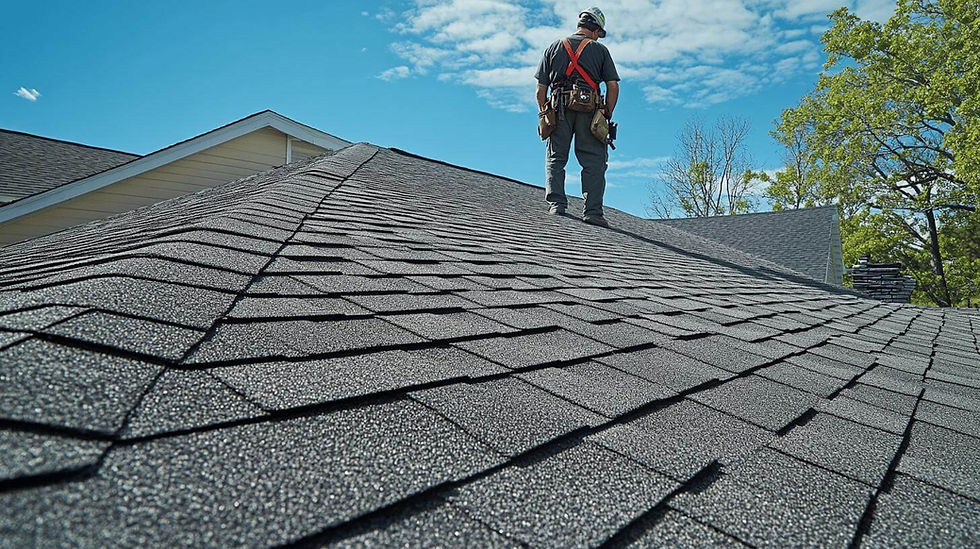
It's Not Just Hail: Wind and Storm Damage Signs Ohio Homeowners Miss
- Mike Kvak

- 7 days ago
- 5 min read
Every spring, the calls start coming in after hail. But the jobs that keep us busiest through June and July? A lot of those come from wind damage nobody noticed until water showed up inside. Hail leaves marks. Wind damage hides.
The Storm Damage Most People Don't See Coming
Northeast Ohio storms bring more than hail. Medina, Summit, and Cuyahoga counties see straight-line winds, sustained heavy rain, and debris impact events every spring and summer. Each one damages your roof differently, and most of it doesn't show up as a leak until months later.
💨 Wind Damage
Lifts shingle edges and breaks adhesive seals. Damage is slope-specific and easy to miss from the ground.
🌧️ Water Intrusion
Heavy rain exploits cracked flashing, failed pipe boots, and debris-blocked valleys. Slow leaks that hide in insulation.
🌳 Debris Impact
Branches and loose material driven by wind can crack shingles, puncture felt, and damage flashing without leaving obvious marks.
❄️ Ice Dams (Late Season)
Freeze-thaw cycles in March and April push water back under shingle courses. Common in older Medina County homes.
Wind Damage: The One That Sneaks Past You
You don't need a tornado to damage a roof. Straight-line winds at 50–60 mph are common in Northeast Ohio during spring and summer storms, and they're enough to lift shingle edges, break the adhesive seal between courses, and create entry points that won't show up until the next heavy rain.

What makes wind damage tricky is the pattern. Hail hits everywhere. Wind tends to hit specific slopes, usually the side facing the prevailing wind direction, and the damage often looks minor from the ground. A lifted shingle tab. A small section where shingles look slightly out of alignment. A ridge cap piece that shifted two inches. Each of those is a gap where water gets in.
⚠ Why Wind Damage Gets Missed
Unlike hail, wind damage doesn't leave circular impact marks. Lifted tabs and broken seals can look like normal shingle aging from the ground, and they're often on the rear slope homeowners never see. By the time it shows up as a ceiling stain, water has usually been in the decking for weeks.
Rain and Water Intrusion: When the Storm Didn't Look That Bad
Heavy sustained rain without significant wind or hail can still cause damage, especially on roofs that are already compromised or approaching end of life. Flat or low-slope sections are particularly vulnerable.
The damage here isn't usually dramatic. It's a flashing joint that lifts slightly under pressure. A valley where debris has accumulated and water is backing up instead of draining. A pipe boot seal that's been slowly cracking and finally lets water past during a two-inch rain event.
📍 Where to Look in Your Attic After Heavy Rain
Water stains on roof decking boards, daylight visible through the deck, soft or saturated insulation near the eaves, and discoloration around the chimney base, skylights, or any plumbing penetration. These are slow leaks. By the time you see a ceiling stain, mold is usually already present in the insulation below.
💡 Pro Tip: Check Both Sides
Wind damage is almost always slope-specific. If your house faces northwest, walk around to the northwest-facing roof slope first. That's where the prevailing storm winds hit hardest in Northeast Ohio. Rear slopes and garage roofs are the most commonly missed during homeowner walkarounds.
Why This Matters for Your Insurance Claim
Wind and rain damage are covered perils under most Ohio homeowners insurance policies, but they require documentation that connects the damage to a specific weather event. That's harder to establish three months later.
The pattern is always the same: storm happens, homeowner waits, damage worsens, adjuster asks when it occurred, homeowner can't prove it was a specific storm versus general wear. Claim gets reduced or denied.
STORM OCCURS
Wind, hail, or heavy rain event hits your area. Damage may not be visible yet.
CALL FOR A FREE INSPECTION WITHIN 48-72 HOURS
A roofer documents damage with timestamped photos and ties it to the weather event. This is what holds up with your adjuster.
ROOFER MEETS ADJUSTER ON-SITE
Your contractor walks the inspection with the adjuster and provides the written scope. This prevents lowball estimates.
CLAIM APPROVED, REPAIR SCHEDULED
Out-of-pocket is typically your deductible. The insurance company covers the rest for a covered peril.
⚠ Ohio Claim Window
Most Ohio homeowners insurance policies give you one year from the storm date to file. Some carriers have tightened this to six months. Waiting to "see if it causes a problem" is the most common reason claims get denied, not the damage itself.
What to Do After Any Storm
You don't need to get on your roof. In fact, don't. What you should do within 48 hours of any significant storm: walk the perimeter of your house at ground level, check your gutters for granules or debris, and look up at each slope from a distance. If anything looks off, call for a free inspection.

✓ The Inspection Is Free
The inspection takes about 45 minutes. The documentation is free. You only pay if there's work to do, and if there's a valid insurance claim, your out-of-pocket is typically just your deductible. If there's no claim-worthy damage, we'll tell you that too.
Frequently Asked Questions
Does wind damage count as storm damage for insurance purposes?
Yes. Wind damage is a covered peril under most standard homeowners insurance policies in Ohio. You'll need to document the damage and tie it to a specific weather event. A professional inspection done promptly after the storm makes that significantly easier.
How can I tell if my roof has wind damage without getting on it?
From the ground, look for lifted or curled shingle edges, missing shingle tabs, misaligned ridge cap shingles, and any section where the roof surface looks uneven. Pulled or sagging gutters are also a sign the roofline took wind stress.
Can rain alone damage a roof?
Yes, particularly on roofs with existing vulnerabilities like worn flashing, cracked pipe boot seals, or debris accumulation in valleys. Heavy rain events can push water past compromised seals that hold up under normal conditions.
How long do I have to file a wind or rain damage claim in Ohio?
Most Ohio policies give you one year from the date of the storm. Some carriers have reduced this to six months. Filing sooner is always better because the connection between damage and event is easier to establish.
Do I need to be home during the inspection?
No. A roofer can inspect the exterior without you being present. 4K Roofing will send a full photo report after the inspection regardless.