

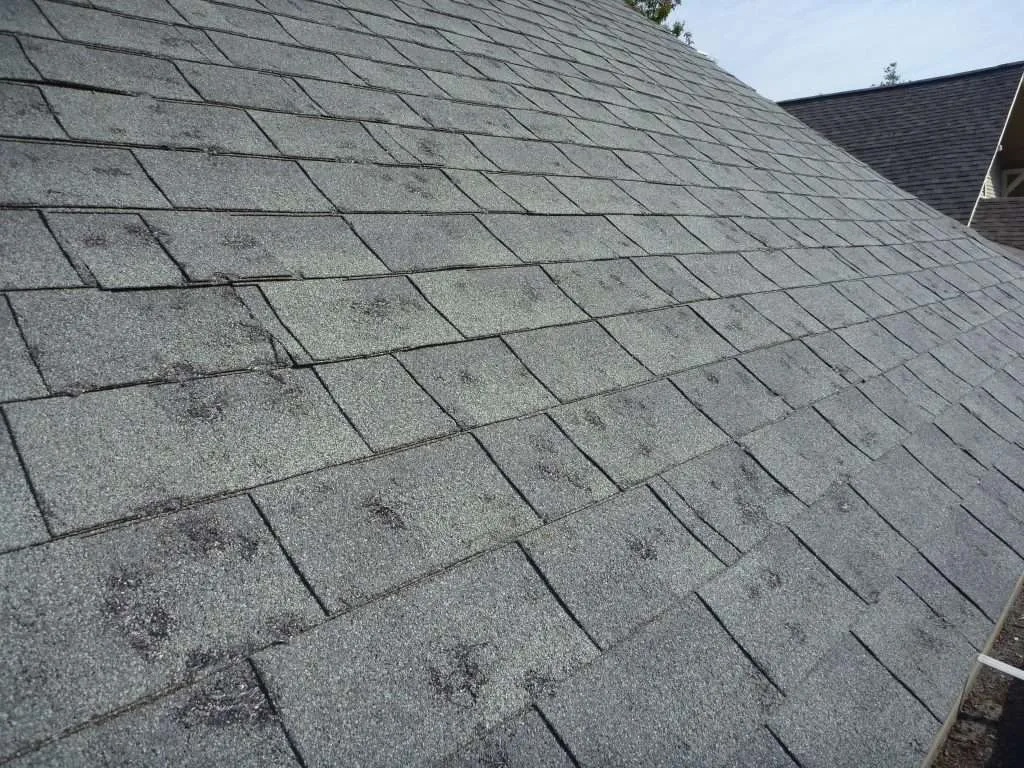
Quick answer: Insurance totals a roof for hail when the damage is widespread enough that a repair will not restore it, or when matching shingles are no longer available. It repairs the roof when the damage is isolated to one slope or a few spots. In Ohio, whether you get a full replacement also depends on your policy paying replacement cost (RCV) versus actual cash value (ACV), and on the roof passing the adjuster damage threshold, usually a set number of hail hits per test square.
This is the question every homeowner asks after a storm: is the whole roof getting replaced, or are they just patching it? The honest answer is that it depends on how the damage is spread, what your policy covers, and how well the damage is documented. Here is how it actually works in Northeast Ohio.
Repair vs. total: what the adjuster is measuring
An adjuster does not total a roof because it looks bad. They total it when a repair cannot bring it back to pre-storm condition. To decide, most carriers use a test square, a 10-foot-by-10-foot section of roof. The adjuster counts the hail hits inside it. If the number crosses the carrier threshold (often 8 to 10 bruises per test square, though it varies), the whole slope, or the whole roof, qualifies for replacement instead of a spot repair.
So hail damage scattered evenly across every slope is far more likely to total a roof than a cluster of dents on one side. This is exactly why a roofer should be on the roof during the inspection, marking hits so nothing gets undercounted.
RCV vs. ACV: the setting that decides your check
Two policies can approve the same roof and pay very differently.
- Replacement Cost Value (RCV): pays what it costs to replace the roof today. You usually get an initial check for the depreciated amount, then the rest (the recoverable depreciation) once the work is done. This is the coverage that gets you a full new roof for your deductible.
- Actual Cash Value (ACV): pays the depreciated value only. On an older roof, that can be a fraction of replacement cost, and you cover the gap. Some Ohio policies switch older roofs to ACV or apply a roof-payment schedule based on age.
Check which one you have before the adjuster arrives. It changes the math completely.
The matching problem
Even limited hail damage can total a roof when the shingles cannot be matched. If your shingle is discontinued, or the color has weathered so a new shingle will not blend, a repair leaves an obvious patch. Many policies require a reasonably uniform appearance after a covered loss, which can push a partial repair into a full slope or full roof replacement. Discontinued shingles are common on roofs more than 10 to 15 years old.
Functional vs. cosmetic damage
Carriers separate functional damage (hits that shorten the roof life by knocking off granules and bruising the mat) from cosmetic damage (marks that do not affect performance). Functional damage is covered. Some policies now carry a cosmetic damage exclusion, mostly on metal roofs, that denies purely cosmetic dents. Asphalt hail damage is almost always treated as functional, because granule loss genuinely shortens the roof life.
What you should do
- Note the storm date and confirm it with a weather record. Claims are tied to a date of loss, and Ohio policies have a filing window.
- Get a free roof inspection before you call your insurer, so you know what you actually have.
- Have your roofer meet the adjuster on the roof. This one step is the difference between a partial payout and a full roof.
- Read your declarations page for RCV vs. ACV and any roof-age or cosmetic clauses.
4K Roofing handles this end to end: we document the hail damage, meet your adjuster, and manage the insurance claim so the scope reflects the real damage. Most homeowners pay only their deductible. For the storm side, see our storm damage page.
Frequently Asked Questions
How much hail damage does it take to total a roof?
Most carriers use a test square (10 feet by 10 feet) and count hail hits inside it. When the count crosses the carrier threshold, often around 8 to 10 bruises per square, the slope or roof qualifies for replacement instead of a repair. Damage spread across every slope totals a roof far more often than damage clustered on one side.
Will insurance replace my whole roof or just one side?
It depends on where the damage is and whether the shingles can be matched. Isolated damage on one slope may be repaired or that slope replaced. If damage is widespread, or the shingle is discontinued so a repair will not blend, carriers often approve a full replacement. A roofer meeting the adjuster helps document the full scope.
Does a cosmetic damage exclusion mean hail is not covered?
Cosmetic exclusions mostly apply to metal roofs and deny dents that do not affect performance. Asphalt shingle hail damage is almost always treated as functional, because granule loss and mat bruising genuinely shorten the roof life, so it is typically covered. Check your policy for a cosmetic clause.
What is the difference between RCV and ACV on a roof claim?
Replacement Cost Value (RCV) pays what it costs to replace the roof today, usually an initial depreciated check plus recoverable depreciation once the work is done. Actual Cash Value (ACV) pays only the depreciated value, which can be far less on an older roof. Your declarations page tells you which you have.